☀️ More Than Just a Destination
Have you ever visited a place that feels less like a country and more like a beautiful, well-guarded secret? Tucked high in the eastern Himalayas, Bhutan is exactly that—a kingdom where the air smells of pine and prayer flags, and where the government officially prioritizes Gross National Happiness over Gross Domestic Product.
Let’s be real for a second—most of us chase happiness on vacation, right? We look for sun, relaxation, and a break from stress. But Bhutan? Bhutan is the only country on the planet that has turned happiness into a national science. It’s not just a marketing slogan here; it’s a way of life, carved into the mountains and whispered by the winds in the valleys.
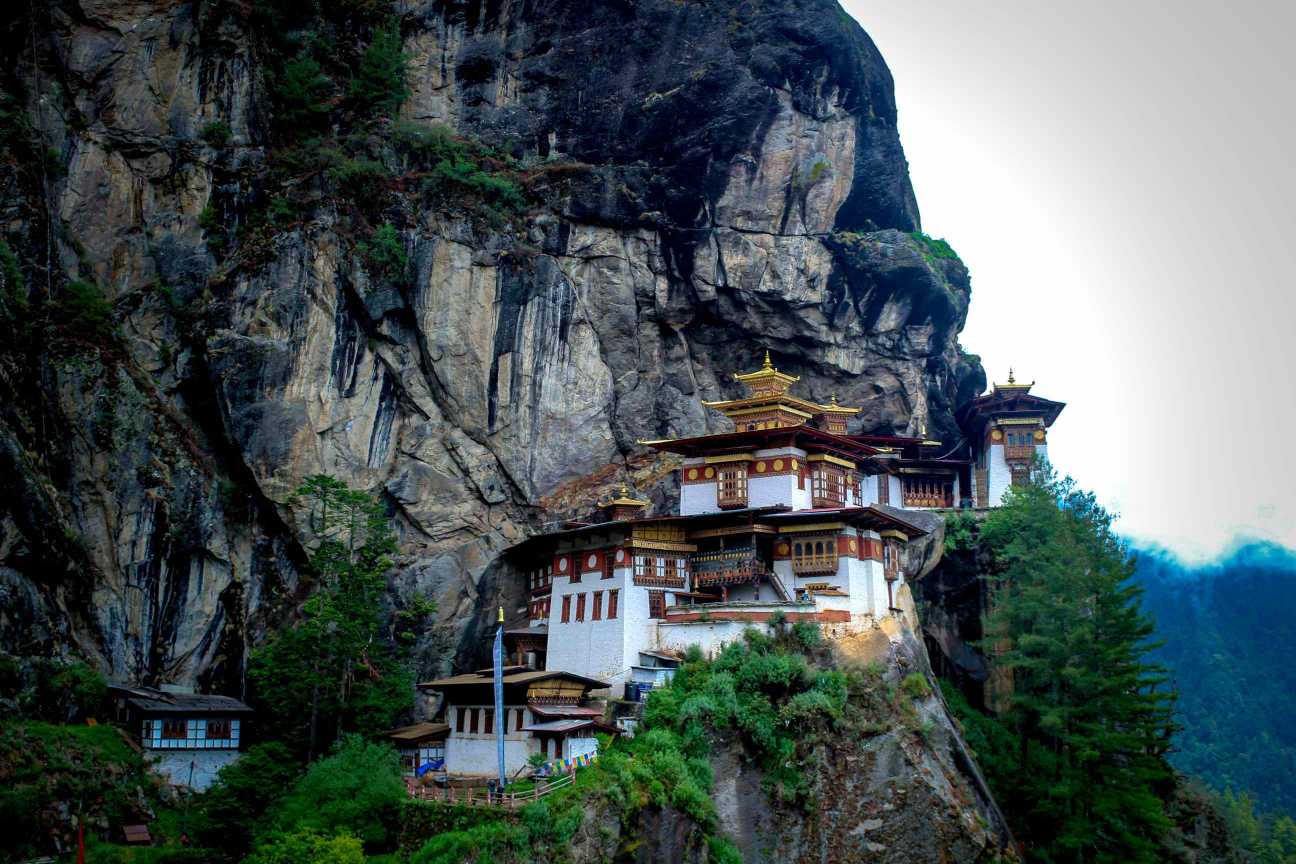
For adventure-seekers and soul-soothers alike, this tiny nation is a powerhouse of wonder. Imagine hiking through lush rhododendron forests in the spring to reach the legendary Tiger’s Nest Monastery (Paro Taktsang), clinging to a cliff face 3,000 meters above the valley floor. Picture yourself driving over the Dochula Pass on a clear winter morning, watching 108 chortens (stupas) gleam against a backdrop of the snow-capped Himalayas. Or perhaps, sitting down for a steaming plate of Ema Datshi—the national dish of chili peppers and cheese—while locals cheerfully explain that the burn is the best part.
And here’s the kicker: This isn’t a place that feels rushed or overcrowded. Bhutan practices a “High-Value, Low-Volume” tourism policy, which means you are here to experience the magic, not just take a selfie and leave.
But don’t worry—navigating this haven is easier than you think. From the towering peaks of the Great Himalayas in the north to the steamy subtropical jungles in the south, this guide is your passport to planning the trip of a lifetime. We are covering the epic history, the jaw-dropping geography, and exactly how many travelers are lucky enough to visit this kingdom each year.
Ready to find happiness? Let’s dive in.
📜 History & Geography – The Dragon’s Domain
To understand Bhutan, you have to look at the map. Sandwiched between the massive powerhouses of China (Tibet) to the north and India to the south, Bhutan is a landlocked fortress [2†L16-L17]. The country’s official name, Druk Yul, translates poetically to “Land of the Thunder Dragon,” named for the violent summer storms that roar down from the Himalayas. For centuries, it kept its borders largely sealed, protecting its unique Buddhist culture from the outside world—a strategy that has gifted us with one of the most pristine and authentic travel destinations on the planet.
🏞️ The Lay of the Land (Geography)
The geography here reads like a dramatic novel, with a plot twist at every turn. Forget everything you know about a single climate; Bhutan runs on extremes.
- The Northern Belt (The Great Himalayas): Up in the north, you’re in the big leagues. This is where the earth touches the sky, with peaks soaring over 7,300 meters (24,000 feet) . These mountains are perpetually wrapped in snow and ice. This isn’t just the border with Tibet; it’s the rooftop of the world.
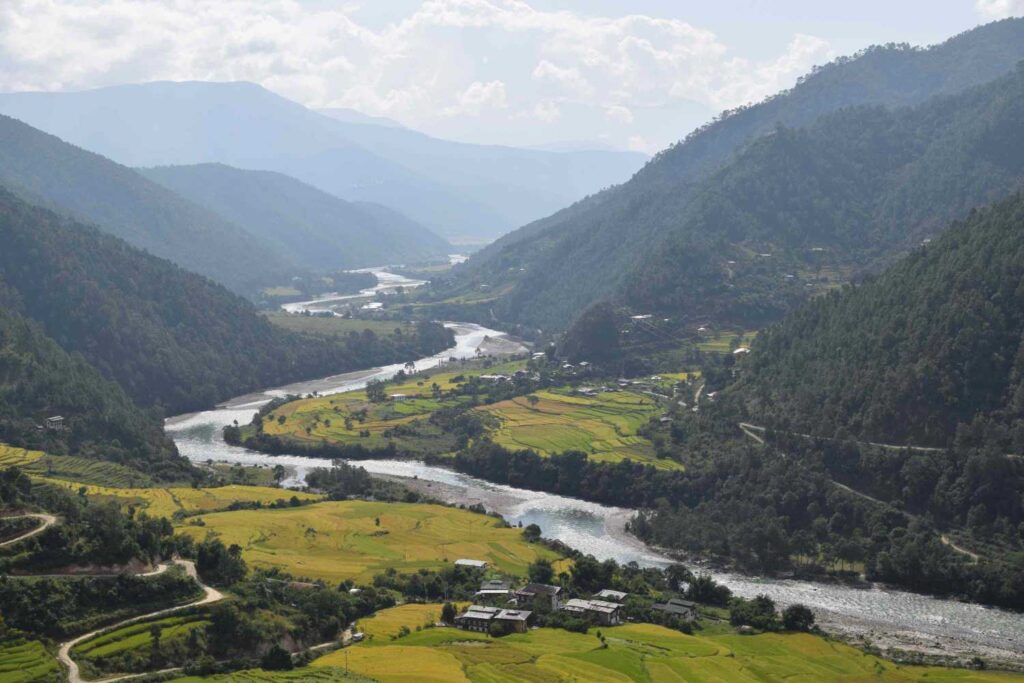
- The Central Belt (The Valleys): As you drift south, the icy giants give way to the Himalayan foothills. This is the green heart of Bhutan. Here, you’ll find deep, fertile valleys like Paro, Punakha, and Thimphu at elevations between 1,200 and 3,700 meters. The weather is brisk and refreshing, making it the prime spot for trekking and cultural tours.
- The Southern Belt (The Subtropical Plains): Finally, meet the Duars Plain. It’s hot, humid, and bursting with jungle life. Yes, you read that right—tropical jungles and elephants exist just a few hours from alpine peaks. It’s a biological mashup that makes Bhutan a biodiversity hotspot.
👑 A Walk Through Time (History)
Bhutan’s history is as epic as its landscape. While scattered settlements existed during the Stone Age, the real story begins with the arrival of Buddhism in the 8th century.
- The Birth of a Nation (1616-1634): The architect of modern Bhutan was a man named Ngawang Namgyal, a Tibetan lama who fled religious persecution. Arriving in 1616, he unified the warring valleys under a system of laws and built those massive fortress-monasteries you see in photos, known as “Dzongs.”
- The Wangchuck Dynasty (1907): For almost 200 years, the region was a loose confederation. However, in 1907, Ugyen Wangchuck emerged as the uncontested leader and was unanimously elected as the first hereditary King of Bhutan. The monarchy we know today was born.
- Happiness as a Metric (1972): This is the moment the world fell in love with Bhutan. The young Fourth King, Jigme Singye Wangchuck, famously declared that “Gross National Happiness is more important than Gross National Product.” He wasn’t joking. Today, GNH is a formal index measured by psychological well-being, health, education, and environmental diversity.
- Modern Democracy (2008): In a shocking (and incredibly humble) move, the Fourth King voluntarily stepped down and transformed the absolute monarchy into a parliamentary democracy—to ensure the country would thrive even without him as king.
📊 Number of Visitors Per Year – The Elusive Kingdom
So, if everyone is reading about how wonderful Bhutan is… why isn’t it packed with tourists like Bali or Bangkok?
That’s the secret sauce of Bhutan. They don’t want mass tourism. They want meaningful tourism. Because of the government’s strict “High-Value, Low-Volume” policy and a mandatory Sustainable Development Fee (SDF) of $100 USD per day, the numbers are refreshingly low [4†L14-L15] [9†L7-L8].
Here is the data breakdown for 2025:
- Total Arrivals: Bhutan welcomed approximately 209,000 to 210,000 international tourists [1†L11-L12] [1†L19-L20].
- The Comeback: This was a staggering 44% year-on-year increase, firmly signaling that the country has bounced back from the pandemic lull [1†L12-L13].
- Visitors by Region: The United States is emerging as a major source market, with arrivals growing by 20% in 2025 compared to 2024 [1†L8-L9].
- The “Before Times” Goal: For perspective, the peak pre-pandemic year saw about 315,000 visitors. The government’s current plan aims to gradually increase to 300,000 “high-value” visitors annually by 2034 [1†L43-L44] [4†L21].
Why does this matter to you as a traveler?
Because these visitor caps mean you aren’t fighting for a sunrise spot at the Tiger’s Nest. You aren’t stuck in traffic jams behind tour buses. You get wide-open spaces, silent trails, and genuine cultural interactions.

🏔️ The Main Attractions of Bhutan: A Complete Journey Through the Land of the Thunder Dragon
🐯 Paro Taktsang (The Tiger’s Nest Monastery) – Bhutan’s Icon
A Monastery Defying Gravity
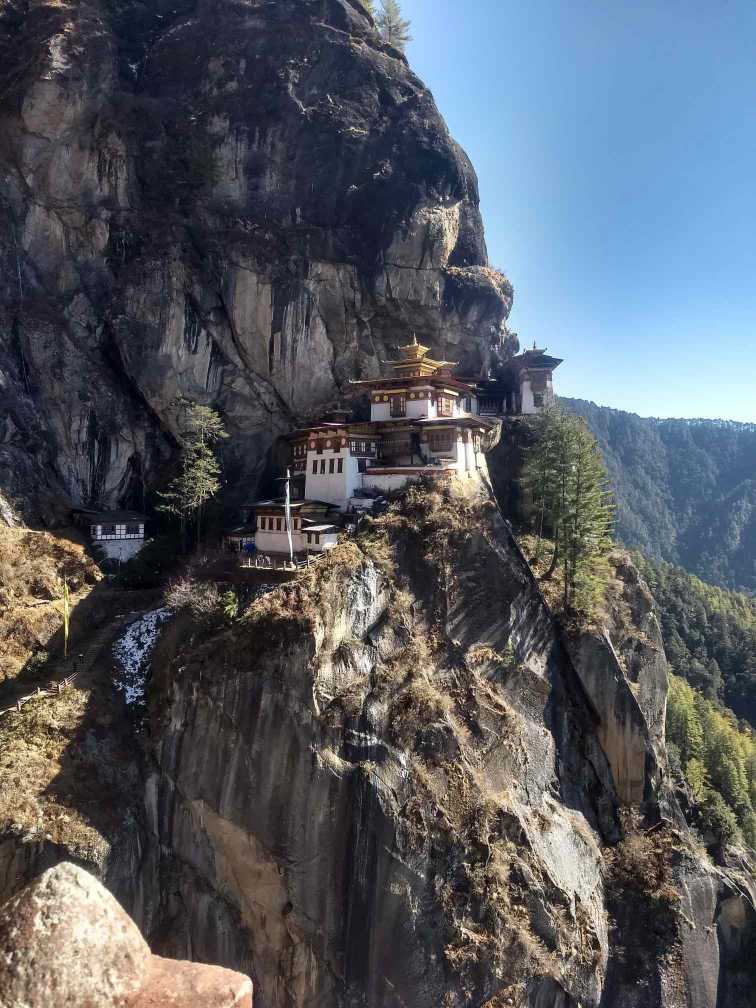
Of all the places in Bhutan, there’s one that stands head and shoulders above the rest—literally and figuratively. Paro Taktsang, better known as the Tiger’s Nest Monastery, clings to a sheer cliff face roughly 900 meters above the Paro Valley floor, at an altitude of about 3,120 meters. It’s Bhutan’s most sacred monastery and one of the world’s most breathtaking sightseeing experiences.
The monastery’s name comes from an incredible legend: It’s said that in the 8th century, Guru Rinpoche (Padmasambhava), the great Buddhist master credited with bringing Buddhism to Bhutan, flew here from Tibet on the back of a flying tigress (some say it was his consort, Khandro Yeshe Tshogyal, who transformed into a tigress). He then meditated in a cave here for three months to subdue local demons, sanctifying the site forever after.
The temple structure as we know it today was built in 1692 by Tenzin Rabgye, and it has stood sentinel over the Paro Valley for more than three centuries. It’s been a pilgrimage destination ever since.
Your Hiking Guide: What to Expect
Here’s the honest truth: Hiking to the Tiger’s Nest requires effort. The round trip is about 6.5 kilometers (4 miles) and takes most people between 4 to 6 hours to complete, depending on fitness level and how much time you spend soaking in the views. The total ascent from the parking area is about 520 meters.
But here’s the good news: The hike is achievable for most people with average fitness, including determined families with children. If you’re worried about the climb, you can also hire horses or mules at the base of the mountain to carry you halfway up the trail, which eases the steepest sections.
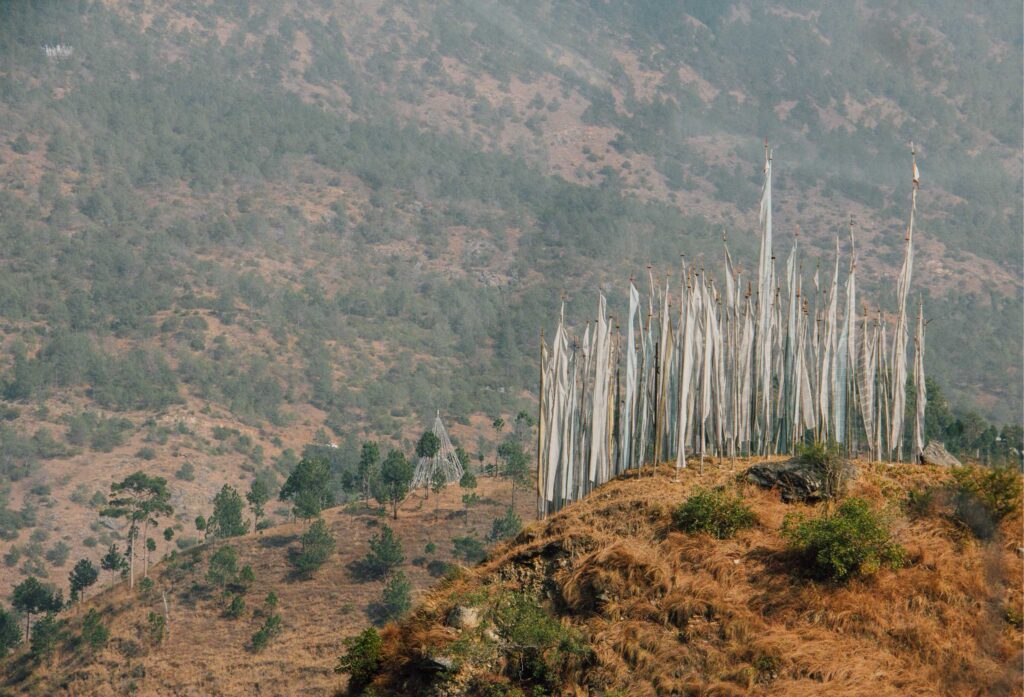
The trail begins about a 30-minute drive from Paro town. You’ll wind through lush pine forests (scented with the fresh, earthy fragrance of Himalayan pines said to have healing properties), rugged rocky terrain, and pass under countless colorful prayer flags fluttering in the wind—each one inscribed with prayers that are carried to heaven with every gust.
Best Time to Visit
Spring (March to May) and autumn (September to November) are the ideal seasons for the Tiger’s Nest hike. Spring brings colorful blossoms that frame the monastery beautifully, while autumn offers golden foliage and the clearest mountain views. During peak season, aim for a weekday visit if possible, as weekends can be busier with domestic pilgrims and tourists alike.
Pro Tips for Your Visit
- Cameras are strictly prohibited inside the temple grounds—your phone stays in your pocket once you reach the inner temples. A guard will remind you at the entrance gate.
- The site is closed daily from 1:00 PM to 2:00 PM, so plan your ascent to arrive during open hours.
- Pack water and snacks. There’s a Taktsang Cafeteria about halfway up where you can rest, grab a coffee, and get that legendary “full-frame view” of the monastery for photos.
- Wear sturdy, broken-in hiking shoes—the trail includes stone steps and uneven terrain.
- Start early in the morning (around 7:00 AM to 8:00 AM) to beat both the sun and any crowds.
Pro Photography Tip: The best photo of Tiger’s Nest isn’t taken at the monastery itself (you’ll be too close), but from the viewpoint before you descend to the final stairs—stop, breathe, and capture the full majesty of the cliffside kingdom.
🏛️ Punakha Dzong – The Palace of Great Happiness
The Most Beautiful Dzong in Bhutan
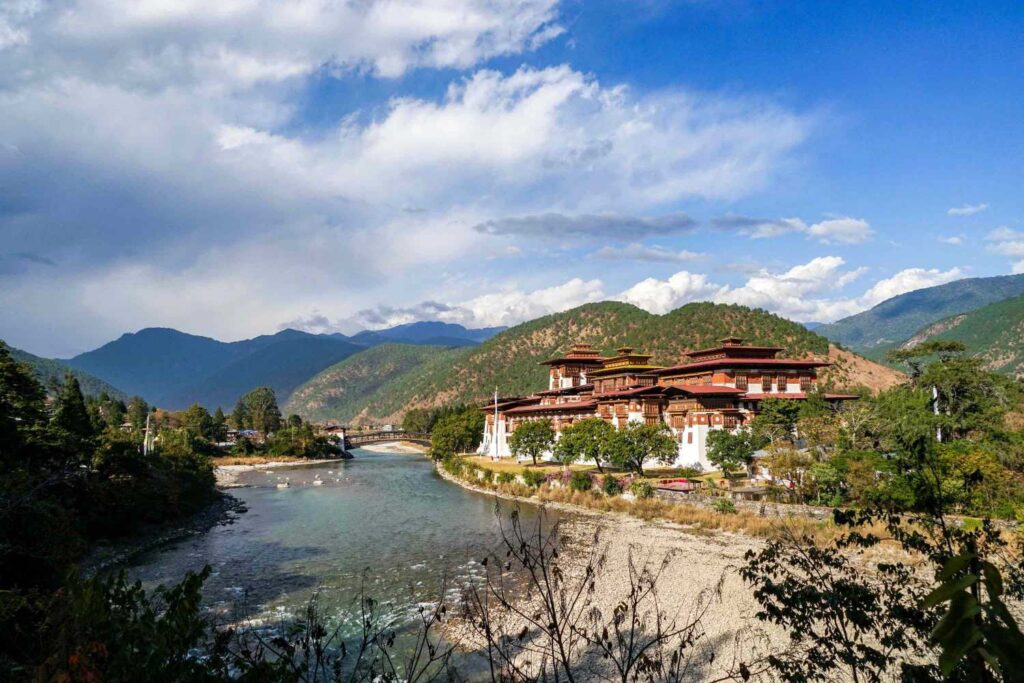
The Punakha Dzong is widely considered the most beautiful fortress-monastery in all of Bhutan. Known officially as Pungthang Dechen Phodrang—which translates to “the Palace of Great Happiness or Bliss”—it’s a stunningly elegant six-story structure perched at the confluence of the Mo Chhu (Mother River) and the Pho Chhu (Father River) in the Punakha Valley.
When the lilac jacaranda trees bloom in spring against the dzong’s towering whitewashed walls, the scene is truly otherworldly.
A Rich History in Stone
Construction began under the visionary leadership of Zhabdrung Ngawang Namgyal in 1637 and was completed by 1638. With dimensions of about 180 meters long and 72 meters wide, it’s the second oldest and second-largest dzong in Bhutan. It served as the capital of the country until 1955, when the seat of government moved to Thimphu.
Here’s a fun fact: The dzong houses the embalmed body of Zhabdrung Ngawang Namgyal in a central tower protected by spices, and it is so sacred that no one except the king or certain high lamas is permitted entry.
Punakha Dzong remains the winter residence of Bhutan’s official monk body, known as the dratshang, and all kings of Bhutan have been crowned within its hallowed walls.
What to Look For
The dzong has three large courtyards (most dzongs have only two), each serving a different purpose. The first northern courtyard houses administrative functions, a giant white Victory Chorten, and a bodhi tree, while the second courtyard contains monastic quarters. The six-story utse (central tower) features a golden dome that was added in 1676 by Gyaltsen Tenzin Rabgye.
Punakha Dzong is also home to sacred Buddhist relics including the Rangjung Kharsapani and the preserved remains of the great treasure revealer Pema Lingpa. The dzong’s brass roof, its steep wooden entry stairs designed to be pulled up for defense, and its nightly sealed wooden doors are all original features that give you a glimpse into ancient Bhutanese strategic defense.
🏛️ Thimphu – The World’s Most Unlikely Capital
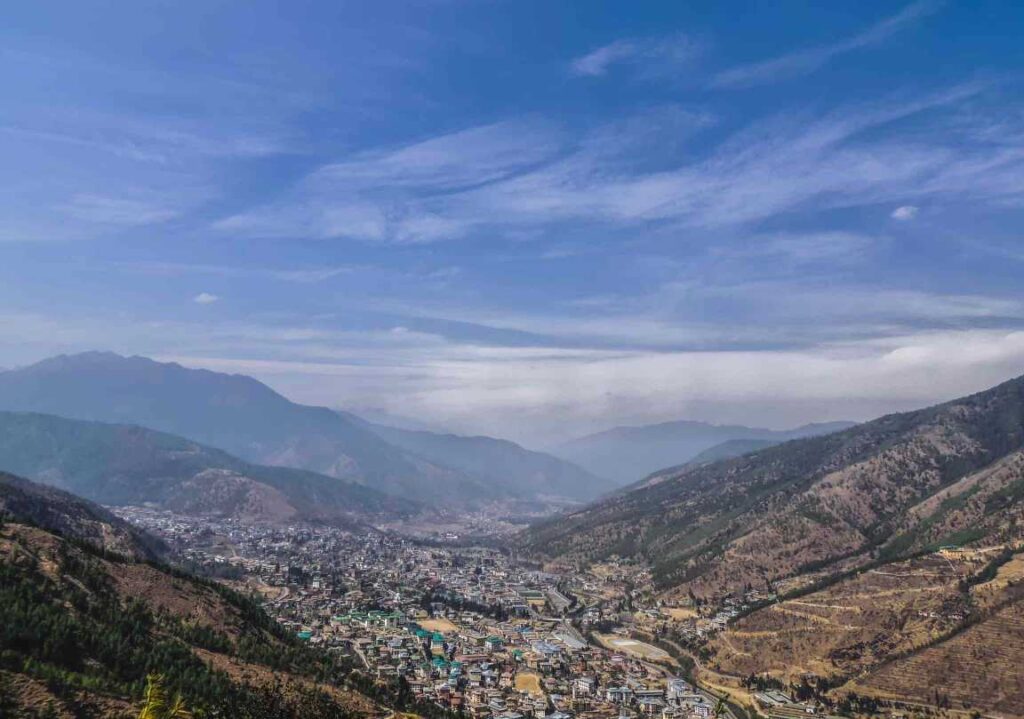
Bhutan’s capital is one of the world’s most unusual cities. There are no traffic lights, several major government buildings look like medieval fortresses, monks in crimson robes outnumber businesspeople, and the dominant sound is prayer bells—not honking horns. This is still very much a city of prayer flags and quiet devotion.
Buddha Dordenma – The Thunderous Giant
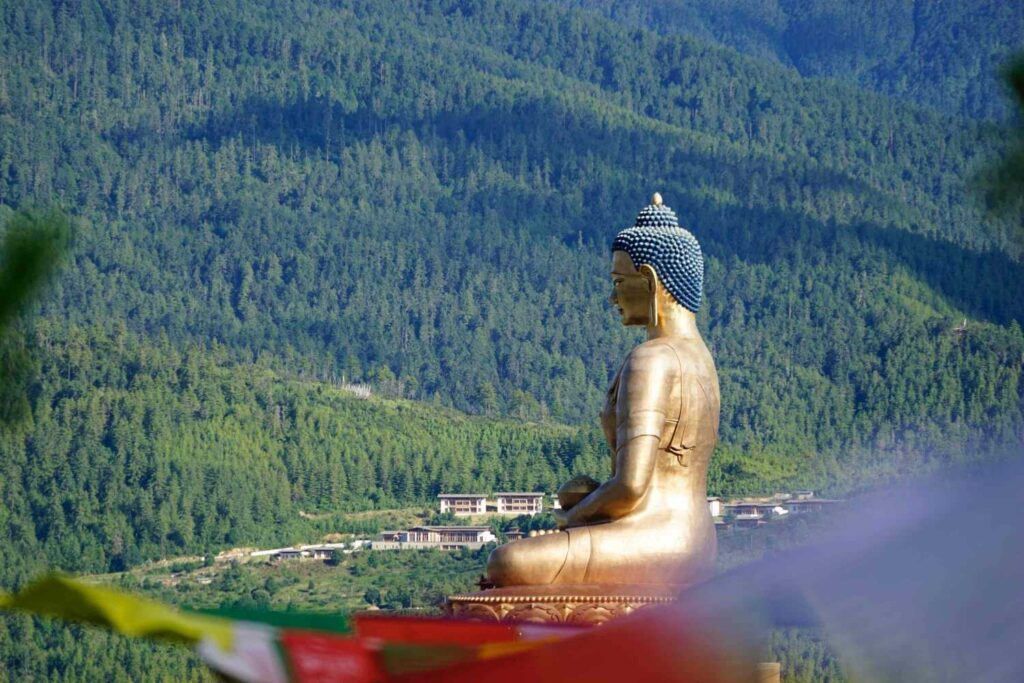
Perched on a hill overlooking the entire Thimphu Valley, the Buddha Dordenma statue is a staggering 51-meter (167-feet) bronze figure, gilded in gold. Inside are 125,000 smaller Buddha statues, also cast in bronze and gilded. The view of the Thimphu Valley, with its river winding through lush foothills, is breathtaking from the statue’s hilltop perch.
Tashichho Dzong – The Seat of Power
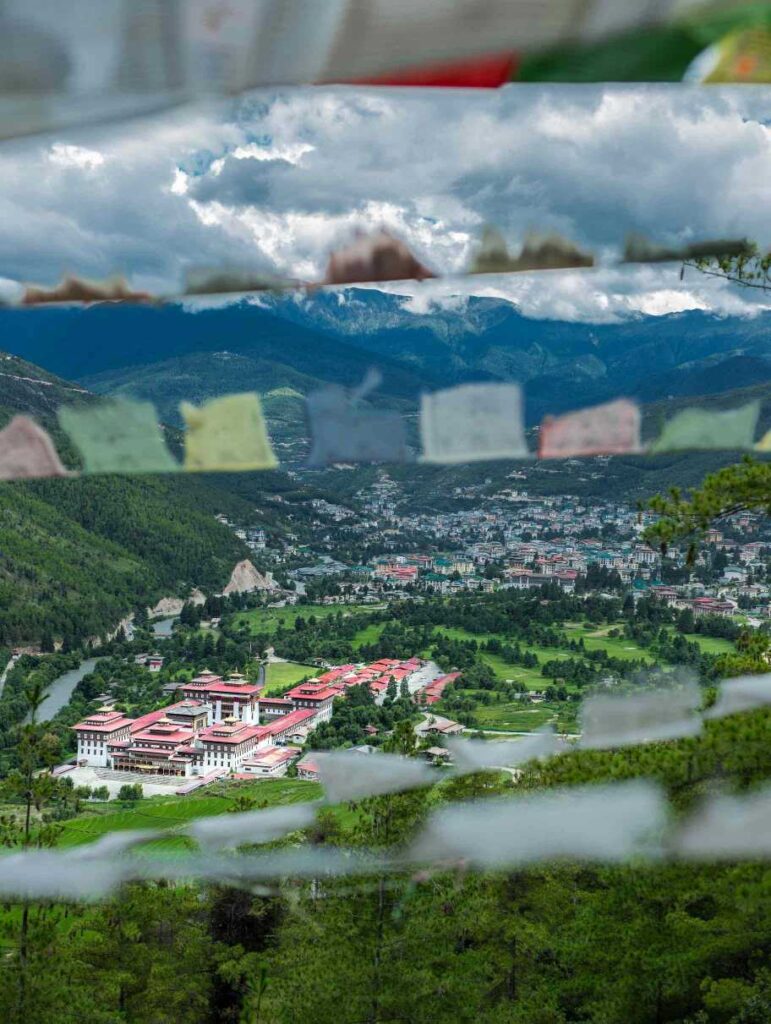
The Tashichho Dzong (or Thimphu Dzong) is a magnificent fortress-monastery housing the throne room of His Majesty the King of Bhutan, along with major government offices and temples. The flag-raising and lowering ceremonies held here daily are worth timing your visit for.
National Memorial Chorten – A Living Monument
This striking white structure crowned with a golden finial was built in 1974 in memory of the third king of Bhutan, Jigme Dorji Wangchuck. Four inner sanctums face the four cardinal directions, and it’s a center of daily worship for both monks and laypeople, who circumambulate the chorten spinning prayer wheels.
- A water purifier is useful because of varying tap water quality.
- Bring your own skincare products, as high-end international brands can be tricky to find outside the capital.
- High-quality bug spray is essential during the warmer, wetter summer months to avoid bites.
- A reliable portable charger is a must, as not every cafe or homestay offers convenient plug.
More Gems in the Thimphu Valley
- Takin Preserve – See Bhutan’s official national animal, a unique goat-antelope creature said to have been created by the revered Buddhist saint Lama Drukpa Kunley. You’ll find no other animal quite like a takin anywhere on earth.
- Simply Bhutan – An interactive museum where you can don a traditional gho (men’s robe) or kira (women’s wrap), try the local wine (ara), try your hand at archery, and experience Bhutanese village life through dance and song.
- Postal Museum – Bhutan’s stamps are world-famous; you can even design your own custom stamp sheet with your face on it.
🕊️ Phobjikha Valley (Gangtey Valley) – The Asian Switzerland
A Hidden Himalayan Bowl
Deep within the Black Mountains of central Bhutan lies the Phobjikha Valley, a vast, U-shaped glacial valley famous as the winter home of the endangered black-necked cranes. The valley—also known as Gangtey—is so pristine and expansive that it’s often called the “Asian Switzerland“.
What makes Phobjikha truly special? According to locals, the valley is considered one of the few blessed “hidden lands” (beyul) predicted by Guru Rinpoche as a sacred refuge for Buddhist practitioners in times of turmoil.
Gangtey Monastery (Gangtey Goemba)
Sitting majestically on a hill overlooking the entire valley floor, the Gangtey Monastery is a 17th-century goemba founded in 1613 by Tenzin Lekpai Dendup, the second reincarnation of Pema Lingpa. Today, it houses about 60 monks and serves as the spiritual center for the Pedling tradition of Buddhism in western Bhutan. The monastery reopened in 2008 after extensive renovations and includes meditation rooms, an altar room, a school for young monks, and permanent monk quarters.
The Black-Necked Cranes
Each winter (approximately November through February), roughly 300 black-necked cranes fly from their summer breeding grounds on the remote Tibetan plateau to Phobjikha’s windswept pastures. Bhutanese believe the cranes circle Gangtey Monastery three times before landing—a greeting to the resident monks.
Gangtey Nature Trail
The Gangtey Nature Trail is a gentle, well-marked walking path that loops around the valley floor, lasting about 2–3 hours. You’ll pass farmhouses, stone chortens, grazing yaks, and hibernating forests, with the monastery glinting on the hill above you at all times.
Visiting a Yak Herder Camp
In Bhutan’s high-altitude regions above 3,000 meters, the indigenous nomadic Brokpas and Joabs still rely on yaks as their lifeline. Herders bring their yaks down to Phobjikha Valley from November to March, setting up seasonal camps just below the Lawola Pass. Visiting a herder camp gives you the rare chance to sample fresh yak cheese, butter, and milk, while learning how women milk the yaks by hand at dawn and how the thick yak wool is spun and dyed with natural pigments to craft heavy winter textiles. Locals affectionately call the yak the “camel of the snows” for its ability to carry heavy loads through the most treacherous mountain passes.
Feeding the Monks Experience
Gangtey Monastery is home to about 160 monks at its Shedra (school). They eat three simple meals a day: rice with butter tea and chili dip for breakfast, and rice with curry for lunch and dinner. Visitors can contribute by donating meals or helping purchase rice and vegetables from local shops. (A $300 USD donation can provide an entire meal for all 160 monks.)
🏞️ Haa Valley – The Land of Hidden Treasure
Just a couple of hours west of Paro lies the Haa Valley, one of the quietest and least-touristed corners in Bhutan. The valley’s name means “Hidden Treasure,” and true to that beautiful name, Haa wasn’t even opened to foreign tourists at all until 2002, making it a hidden gem among Bhutan’s already semi-hidden destinations.
What to See
- Lhakhang Karpo (White Temple) and Lhakhang Nagpo (Black Temple), said to have been built simultaneously in the 7th century by Tibetan Buddhist king Songtsen Gampo to subdue a demoness lying across the Himalayas. The largest among 108 such “boundary-taming” temples built across the Tibetan plateau, it was miraculously constructed in a single day.
- Ancient shamanistic traditions (Bon) still coexist peacefully alongside Buddhism in the valley’s more remote hamlets.
- The spring Haa Summer Festival (July) showcasing traditional nomadic lifestyles, yak shows, archery competitions, and local cuisine like hoentoe (dumplings with local cheese and spinach) and butter tea.
🐉 Trongsa – The Heart of Bhutan’s Monarchy
The name Trongsa means “New Village” in Bhutan’s native Dzongkha language, but it’s anything but new—this central district is where the kingdom’s modern royal dynasty first rose to power.
Trongsa Dzong
Trongsa Dzong, built in 1648 in the same decade as Punakha Dzong, is the most strategically located fortress in Bhutan—positioned on a mountain spur overlooking the only east-west trade route for centuries. Every king of Bhutan must serve as Penlop (governor) of Trongsa before ascending the throne, a tradition that underscores the dzong’s political and historical weight.
The dzong’s winding druk chung (the “little dragon” corridor) leads you through open-to-the-sky courtyards, temples in a striking rainbow of colors, and sacred quarters where royal children are customarily blessed.
Ta Dzong Museum
Overlooking the main dzong, the Ta Dzong (watchtower) now houses a museum dedicated to the Wangchuck dynasty, including royal robes, the original crown of the first king, ceremonial saddles studded with turquoise, and vivid thangkha paintings narrating Bhutan’s history.
🛕 Bumthang – Bhutan’s Spiritual Heartland
If Bhutan is the world’s last remaining Vajrayana Buddhist kingdom, then Bumthang is its spiritual, mythical core. It’s a collection of four valleys (Chokhor, Tang, Ura, and Chumey) where towering peaks, potato farms, buckwheat fields, and Europe-style villages give it the nickname “Little Switzerland.”
Key Sites
- Jambay Lhakhang – A 7th-century temple built by Tibetan Emperor Songtsen Gampo in a single day as one of his 108 “boundary-taming” temples; site of the famous Jambay Lhakhang Drup festival (October/November), known for the “Mewang” (fire blessing) and “Tercham” (naked dance).
- Kurjey Lhakhang – Built around a cave containing the body imprint of Guru Rinpoche, who meditated here in the 8th century to subdue a local deity. The oldest temple dates to 1652.
- Tamshing Lhakhang – Founded in 1501 by Terton Pema Lingpa, the famed treasure discoverer; still contains original 500-year-old wall paintings.
- Mebar Tsho (The Burning Lake) – Not a lake but a deep pool in a river where Pema Lingpa reportedly dove into water holding a butter lamp and emerged with the lamp still burning, carrying hidden scriptures—considered proof of his authenticity as a tertön (treasure revealer).
Outdoor Activities
Bumthang is perfect for gentle bike rides along the scenic Chokhor Valley floor, day hikes to Tang Valley’s waterfalls or to Ura Valley’s yak pastures, and trout fishing (yes, Bumthang grows serious brown trout). In late October, the entire region is painted gold by buckwheat harvests. Known for its wool textiles and locally brewed red rice wine called Bangchang, Bumthang also produces honey and artisan cheeses worth bringing home as delicious edible souvenirs.
🎉 Festival Highlights: Where to Plan Your Bhutan Tshechu
No Bhutan travel guide is complete without mentioning tshechus, the vibrant religious festivals held annually at dzongs and monasteries. To make your planning easier, here are the top festivals to aim for in 2025:
| Festival Name | Location | Primary 2025 Dates | Why You Should Go |
|---|---|---|---|
| Punakha Drubchen & Tshechu | Punakha Dzong | Mid-February to early March | Witness reenactment of 17th-century Tibetan war victory, featuring 400+ dzongpon (warriors in traditional armor). |
| Paro Tshechu | Paro Dzong (Rinpung Dzong) | March/April (dates vary) | The most famous tshechu; climaxes with unfurling of a giant thondrol (sacred scroll) before dawn on the final day. |
| Thimphu Tshechu | Tashichho Dzong, Thimphu | Late September/early October | Largest festival in Bhutan; hundreds of masked dancers, market stalls, and elaborate social gathering spanning 3–4 days. |
| Jambay Lhakhang Drup | Jambay Lhakhang, Bumthang | October/November | Features “Mewang” (fire blessing) and “Tercham” — the famous naked dance performed by monks for fertility blessings. |
| Haa Summer Festival | Haa Valley | July (specific dates vary by year) | Less religious, more cultural — showcases traditional nomad life, yaks, archery, and local cuisine. |


🎎 Culture of Bhutan: Where Happiness Is a Way of Life
Stepping into Bhutan feels like stepping into a living, breathing museum of traditions—yet it’s not stuck in the past. The culture here is vibrant, colorful, and deeply woven into everyday life, from the clothes people wear to the way they greet each other. Understanding a bit of this cultural tapestry will make your visit infinitely richer.
👘 National Dress: The Gho, The Kira, and That Handy Pouch
Bhutan is one of the few countries in the world where traditional dress is still widely worn—not just for festivals, but for school, work, and daily life. The government requires all citizens to wear the national dress when in government offices, schools, and formal occasions.
For men: The Gho
The gho (or g’ô) is a knee-length robe that wraps around the body and is fastened with a belt called a kera, creating a large pouch across the belly. What do Bhutanese men keep in that pouch? Pretty much everything—phones, wallets, snacks, and even small babies on occasion. It’s like a tailor-made pocket that never gets lost.
For women: The Kira
The kira is an ankle-length dress that wraps around the body and is fastened at the shoulders by two elegant brooches, then tied at the waist with a colorful belt. Layered underneath is a wonju (blouse) and a tego (jacket), creating a graceful, multi-layered look.
Note for travelers: While you’re not required to wear a gho or kira, dressing respectfully is appreciated. Avoid shorts or revealing clothing, especially when visiting dzongs and temples. Shoes must be removed before entering religious sites, homes, or any sacred space—keep an eye out for the shoe racks at temple entrances.
🏛️ Driglam Namzha: The Etiquette That Holds It All Together
Bhutanese society follows a 17th-century code of conduct called Driglam Namzha, introduced by the unifier Zhabdrung Ngawang Namgyal. It’s not just about dress—it covers how you speak, eat, drink, walk, sit, greet others, bow, and even how you think.
Some key customs you’ll encounter:
- Use your right hand when giving or receiving anything—never your left hand.
- Never point your feet toward a Buddhist statue, a monk, or anyone older than you. It’s considered extremely disrespectful.
- Walk clockwise around temples, stupas, and religious objects. You’ll notice other worshippers doing this—it’s a sign of reverence.
- Make a small donation when visiting a monastery or temple as a gesture of respect.
Driglam Namzha also includes “lueki driglam”—physical etiquette covering how one eats, drinks, and conducts oneself. These aren’t rigid rules meant to intimidate visitors; rather, they’re a reflection of a culture where humility, respect, and mindfulness are daily practices.
🗣️ Language & Religion
Language: The official national language of Bhutan is Dzongkha, which belongs to the Tibetan language family. English is widely used as the medium of instruction in schools and is spoken by most people working in tourism, so you won’t have trouble communicating in hotels, restaurants, and shops.
Religion: Vajrayana Buddhism (specifically the Drukpa Kagyu school) is the state religion, practiced by approximately 75% of the population. The remaining population practices other forms of Buddhism or Hinduism, particularly in the southern regions. Visiting a dzong or monastery isn’t just a tourist activity—it’s witnessing a living faith in action, with monks chanting, butter lamps flickering, and prayer wheels spinning ceaselessly.
You might also encounter remnants of the Bon religion, an ancient shamanistic tradition that predates Buddhism, especially in remote villages. Many Bhutanese incorporate both Buddhist and Bon practices into their spiritual lives.
🎉 Festivals: When Bhutan Comes Alive
You haven’t truly experienced Bhutan until you’ve witnessed a Tshechu. These annual religious festivals are held at dzongs and monasteries across the country, typically on the 10th day of a month in the Bhutanese lunar calendar. They’re a whirlwind of masked dances, colorful silk costumes, ancient music, and joyful community gatherings.
Here are the major Tshechu dates for 2025 to help you plan:
| Festival Name | Location | 2025 Dates |
|---|---|---|
| Punakha Tshechu | Punakha Dzong, Punakha | February 9–11 |
| Paro Tshechu | Rinpung Dzong, Paro | April 8–12 (Thongdral on final day) |
| Gomkora Tshechu | Gomkora, Trashi Yangtse | April 5–7 |
| Rhododendron Festival | Lampelri Botanical Garden, Dochula | April 22–24 |
| Thimphu Tshechu | Tashichho Dzong, Thimphu | October 2–4 |
| Jakar Tshechu | Bumthang Valley | October 29 – November 1 |
| Chhukha Tshechu | Chhukha Dzong, Chhukha | October 29–31 |
| Pemagatshel Nangkor Tshechu | Nangkhor Lhakhang, Pemagatshel | October 29 – November 1 |
The highlight of any Tshechu is the unfurling of the thongdrol (a giant sacred scroll painting) at dawn on the final day. It’s believed that simply seeing the thongdrol cleanses the viewer of sin. Plan ahead—accommodation fills up months in advance for major festivals.
🐉 National Symbols: What Makes Bhutan, Bhutan
You’ll see Bhutan’s pride displayed everywhere in its national symbols:
- 🦬 National Animal: Takin. This bizarre, otherworldly creature looks like a goat crossed with an ox—because, according to legend, that’s exactly what it is. The “Divine Madman,” Lama Drukpa Kunley, is said to have created the takin by attaching a goat’s head to a cow’s skeleton (or, in some versions, feeding a goat and a cow together to create a new species). Whatever the origin, you can see these gentle giants at the Motithang Takin Preserve in Thimphu.
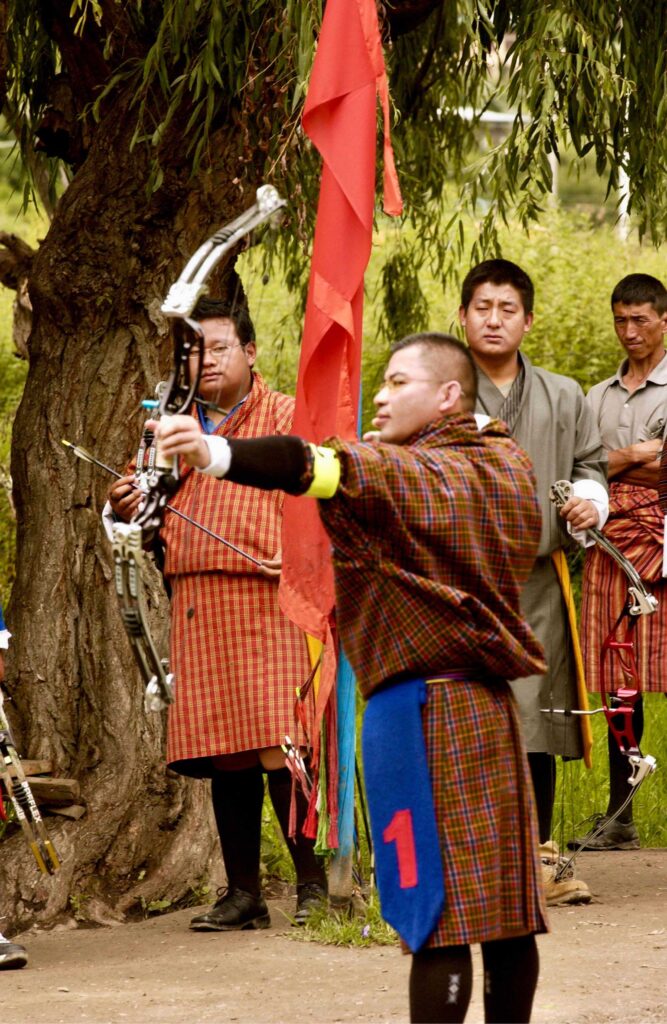
- 🏹 National Sport: Archery. Archery was declared the national sport in 1971 and is a celebration of the Bhutanese way of life. But this isn’t Olympic archery. Traditional Bhutanese archery uses cane arrows (very different from modern carbon arrows) and targets placed 140 meters apart—much farther than the international standard. Points are scored only for hitting the target, not just the general area. Matches are full-day social events, complete with singing, dancing, taunting, and feasting—and if a teammate makes a great shot, the entire opposing team often sings to mock them. It’s as much about theater as it is about accuracy.
- 🍛 National Dish: Ema Datshi. More on this fiery delight in the food section below.
📝 Cultural Do’s and Don’ts (Your Cheat Sheet)
| Do | Don’t |
|---|---|
| Dress modestly, covering shoulders and knees. | Wear shorts or sleeveless tops in public. |
| Remove shoes before entering temples and homes. | Point your feet at statues, monks, or elders. |
| Walk clockwise around religious monuments. | Touch or climb on religious statues and paintings. |
| Use your right hand to give and receive things. | Photograph people without asking permission. |
| Ask before photographing monks or ceremonies. | Eat or drink inside temple prayer halls. |
| Make a small donation at monasteries. | Show anger or lose your temper in public. |
Travel Tip: Bhutanese names don’t include family names—everyone has a personal name only. If you meet someone called “Tashi Wangchuk,” “Tashi” is their given name. Use the full name for introductions, but you can use the first name in conversation. Marriage records track lineage instead of surnames.
✈️ How to Reach Bhutan: Your Gateway to the Thunder Dragon
Getting to Bhutan is part of the adventure. The country has carefully limited tourist access for decades, which means the journey itself feels special.
🛩️ By Air: The Scenic Route into the Himalayas
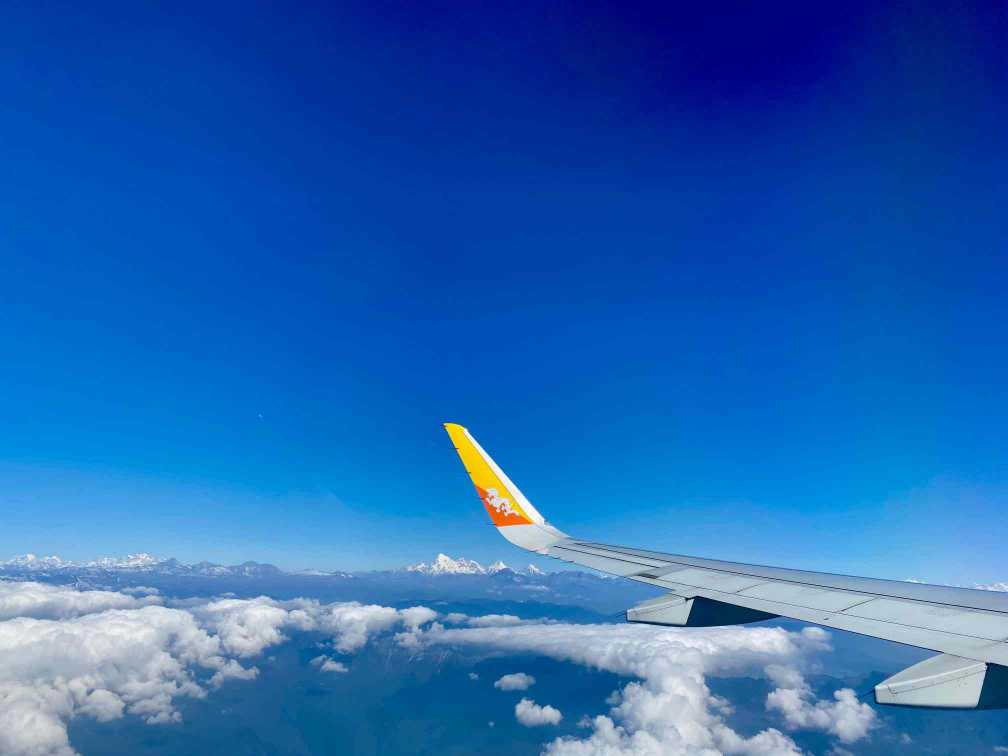
Flying into Paro is an experience you won’t forget—described by many pilots as one of the most challenging landings in the world. The plane weaves through a narrow valley flanked by peaks that rise thousands of meters on either side. Get a window seat (left side flying in, right side flying out) for views of Everest and other Himalayan giants along the way.
The Airlines: Only two airlines are permitted to fly international routes into Bhutan:
- Drukair – Royal Bhutan Airlines (the national carrier)
- Bhutan Airlines (Tashi Air)
Major Gateway Cities:
- Bangkok, Thailand – The most frequent and flexible gateway, with multiple weekly flights.
- Delhi, India – Daily connections available.
- Kolkata, India – A convenient option for travelers coming from eastern India.
- Kathmandu, Nepal – Popular for combining Nepal and Bhutan on the same trip.
- Singapore, Dubai, Dhaka, and Guwahati also offer connections.
Note: There are no direct flights to Bhutan from outside Asia.
Paro International Airport (PBH) is the only international airport in Bhutan. Domestic flights are also available between Paro, Bumthang, and Trashigang, which can save days of driving if you’re short on time.
🚗 By Land: The Overland Adventure
For those with more time (or coming from India), entering Bhutan by road is a wonderful option. The route takes you from the tropical plains of India up into the pine-scented Himalayan foothills.
Main Land Border Crossings:
- Phuentsholing – The most popular entry point, located in southwest Bhutan, approximately 170 km east of Bagdogra Airport in India’s West Bengal state. This is generally the easiest and most straightforward land entry for foreign tourists.
- Gelephu – Located in south-central Bhutan, best for travelers coming from Assam or entering via the central Indian plains.
- Samdrup Jongkhar – The eastern entry point, perfect for those starting their journey from India’s northeastern states (Guwahati).
The Pedestrian Terminal at the Jaigaon-Phuentsholing border operates 24/7. Daily visitors don’t need an entry permit, but staying beyond 24 hours requires registration and payment of the Sustainable Development Fee.
The journey from Siliguri/Bagdogra to Thimphu takes 9–10 hours by road.
🚂 Alternative: Train + Road
While there are no trains inside Bhutan, you can take a train to the border areas:
- Nearest railhead: Hasimara (West Bengal), approximately 17 km from Phuentsholing.
- Regular trains run from Kolkata, New Delhi, and other major Indian cities to New Jalpaiguri (Siliguri).
Your tour operator will typically arrange a private vehicle to meet you at the airport or border crossing. Most visitors find this far more convenient than navigating public transport.
📜 How to Enter: Visas, Permits & The Sustainable Development Fee
This is the most important section for anyone planning a trip to Bhutan. Read carefully.
The Sustainable Development Fee (SDF)
Here’s the reality: Bhutan isn’t a budget destination, and that’s intentional. The government charges a Sustainable Development Fee (SDF) of $100 per person, per night for international tourists. For Indian travelers, the SDF is significantly lower at ₹1,200 per night. Children aged 6–12 years pay $50 per night.
The SDF is non-negotiable and is paid in advance as part of your tour package. It covers:
- Free entry to all dzongs, museums, and cultural sites included in your itinerary
- Sustainable tourism development
- Free healthcare for visitors for emergency medical treatment (serious cases may still require evacuation)
- Environmental conservation efforts
The current SDF rates are valid through August 2027.
Visa Requirements (For Most Foreigners)
Most nationalities require a visa to enter Bhutan. The process works like this:
- Book through a licensed Bhutanese tour operator. You cannot apply for a tourist visa independently. Your tour operator submits your application on your behalf.
- Pay the visa fee of $40 USD (non-refundable, one-time fee).
- Provide a clear copy of your passport (must be valid for at least six months beyond your planned departure date).
- Your tour operator pays the SDF along with the visa fee.
- Receive your Visa Clearance Letter by email.
Upon arrival at Paro Airport or a land border, immigration officials stamp your passport with the actual visa—you do not need to apply for a visa at an embassy or consulate beforehand.
Special Cases: Citizens of India, Bangladesh, and the Maldives do not need a visa but are required to obtain an Entry Permit upon arrival and pay the SDF.
Important: Travel insurance is mandatory for entry into Bhutan.
🏄 What to Do in Bhutan: Adventures for Every Soul
Bhutan offers an incredible range of activities that go far beyond temple-hopping. Whether you’re a hardcore trekker, a cultural enthusiast, or someone who simply wants to soak in hot springs and eat amazing food, Bhutan delivers.
🏹 Archery: The National Obsession
No trip to Bhutan is complete without experiencing archery firsthand.
For watching: If you’re visiting during a festival, archery competitions are often part of the celebrations, and you’re welcome to watch. Teams shoot from 140 meters away, accompanied by singing, dancing, and enthusiastic taunting of opponents.
For trying: Several tour operators offer archery lessons for visitors. The Bhutan Archery Federation in Thimphu can sometimes arrange introductory sessions for tourists.
🎭 Festivals (Tshechus)
As mentioned earlier, Tshechus are Bhutan’s most spectacular cultural events. Planning your trip around one of the major festivals—Paro Tshechu (April) or Thimphu Tshechu (October)—will give you memories that last a lifetime.
What to expect: Days of masked Cham dances, each with a religious meaning; the unfurling of the giant thongdrol at dawn on the final day; bustling food stalls selling momos and butter tea; locals dressed in their finest ghos and kiras; and an atmosphere of joy and devotion unlike anything else.
♨️ Hot Stone Bath (Dotsho): Your Ultimate Post-Trek Reward
If there’s one uniquely Bhutanese experience you shouldn’t miss, it’s the traditional hot stone bath.
How it works: River stones are heated in an open fire until they glow red, then carefully dropped into a handcrafted wooden tub filled with water infused with local herbs (often mugwort or other medicinal plants). As the stones crack from the intense heat, they release minerals into the water.
The result: A deeply therapeutic, detoxifying soak that eases sore muscles, improves circulation, and relaxes the mind. Traditionally performed outdoors near a river, with the sound of flowing water and the smell of woodsmoke in the air.
Where to try it: Many hotels, especially in Paro and Thimphu, offer hot stone baths that can be booked in advance. For a more authentic experience, some tour operators arrange visits to farmhouses where hot stone baths are still prepared in the traditional way.
🏔️ Trekking: The World’s Most Beautiful Trails
Bhutan is a trekker’s paradise, with trails ranging from gentle day hikes to some of the most challenging expeditions on Earth.
Moderate Treks (For Most Travelers):
| Trek Name | Duration (Days) | Highlights |
|---|---|---|
| Druk Path Trek | 4–6 days | Connects Paro and Thimphu via high-altitude lakes (trout fishing!), rhododendron blooms in spring, spectacular mountain views, and yak herder camps. Beginner-friendly. |
| Tiger’s Nest Hike (Paro Taktsang) | 1 day (4–6 hours round trip) | Bhutan’s most iconic hike to the gravity-defying monastery. Not a full trek, but essential. |
| Bumthang Owl Trek | 3–4 days | Gentle trek through Bumthang’s beautiful valleys, passing villages, monasteries, and forests. |
Challenging Treks (For Experienced Hikers Only):
- Snowman Trek – Considered one of the toughest treks in the world, it takes approximately 24–30 days, crosses 11 passes over 5,000 meters, and pushes deep into remote wilderness where few travelers ever venture. Requires excellent fitness and prior high-altitude trekking experience.
- Dagala Thousand Lakes Trek – A 5–6 day trek with stunning views of Mt. Kanchenjunga and dozens of turquoise alpine lakes. Moderately challenging at 4,000–4,500m elevation.
Practical notes: All treks must be arranged through a licensed tour operator, which provides a guide, cook, porters/yaks for supplies, and camping equipment. This is a legal requirement, not just a recommendation.
🚵 Other Adventure Activities
- White-Water Rafting – The Pho Chhu River in Punakha and the Mo Chhu River offer thrilling rafting through beautiful valleys (Class II–III rapids). Best during the post-monsoon months (September–November).
- Mountain Biking – Bhutan’s winding mountain roads offer some spectacular mountain biking routes. Many tour operators offer guided biking tours through valleys like Paro, Punakha, and Bumthang.
- Day Hikes – Not up for a multi-day trek? Dozens of day hikes depart from major towns, from gentle valley walks to steep climbs to hidden monasteries.
🎨 Traditional Arts & Crafts
Bhutan’s artistic traditions are preserved as a sacred inheritance. The Institute of Zorig Chusum (School of the 13 Arts) in Thimphu teaches students the Zorig Chusum—the “thirteen traditional arts,” including:
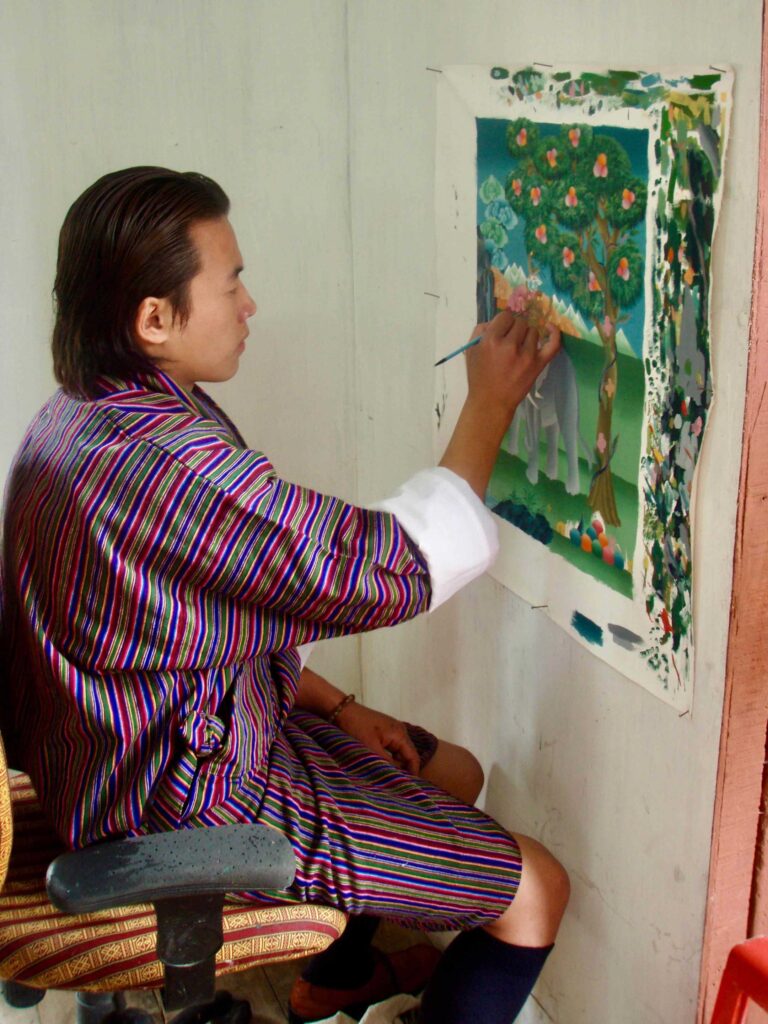
- Lhazo (Painting) – Thangkha (Buddhist scroll painting) is perhaps Bhutan’s most famous art form.
- Jinzo (Sculpting) – Creating Buddhist statues from clay, metal, or wood.
- Shagzo (Woodcarving) – Intricately carved bowls, masks, and furniture.
Dey-zo (Paper Making) – Traditional Bhutanese paper is made from the bark of the Dey-shing plant (Daphne), which produces a textured, durable, insect-resistant paper. The Jungshi Handmade Paper Factory in Thimphu and the workshop in the Dop Shari valley (near Paro) are open to visitors. You’ll see the entire process from tree to paper and can purchase beautiful handmade paper products directly from the artisans.
Weaving – Bhutanese textiles are world-famous for their intricate patterns and vibrant colors. Regions like Khaling in eastern Bhutan are known for their weaving traditions. If you’re interested in purchasing authentic textiles (rather than tourist-market imitations), ask your guide to take you to a weaving center.
Travel Tip: Products made from endangered species (such as certain animal parts) are strictly illegal to buy or export from Bhutan. If a deal seems suspiciously cheap, it probably is.
🍛 Local Foods: A Culinary Adventure That Packs Heat
If you love spicy food, you’ve found your paradise. If you don’t… brace yourself. Bhutanese cuisine is bold, fiery, and utterly unforgettable.
🌶️ Ema Datshi: The National Dish
Let’s start with the big one. Ema Datshi (pronounced ay-ma dah-tsee) is the national dish of Bhutan, and it’s deceptively simple: just chili peppers and cheese.
- “Ema” means chili pepper in Dzongkha.
- “Datshi” means cheese.
That’s it. That’s the dish.
The chilies can be green, white, or sun-dried red, and the cheese traditionally comes from yaks or cows. The result is a spicy, creamy, soul-warming stew that Bhutanese people eat with red rice at almost every single meal. The dish is so beloved that it has its own cult following, and visiting chefs often try (and fail) to recreate its unique balance of heat and creaminess.
Pro tip: Dip pieces of senkong (a fluffy Tibetan bread) to scoop up the cheesy, peppery sauce. It’s the most authentic way to eat it.
🥩 Phaksha Paa: Pork with a Punch
Phaksha Paa is sliced pork stir-fried with red chilies, and sometimes with dried turnip greens or radish. It’s rich, fatty, spicy, and deeply satisfying—exactly what you want after a day of hiking in cold mountain air. The dried chilies used in this dish are often sun-dried and rehydrated, giving the pork an intense smoky flavor.
🍗 Jasha Maru / Jasha Tshoem: Spicy Chicken Stews
Jasha Maru is a stewed minced chicken dish spiced with tomatoes, ginger, garlic, and plenty of chilies. “Jasha” means chicken in Dzongkha—any dish containing that word is a chicken dish.
Jasha Tshoem is a curried chicken version with a thicker gravy. Both are staples in Bhutanese home cooking and commonly found in restaurants.
🥟 Momos: Dumplings of Joy
Tibetan-style dumplings that have become an absolute obsession in Bhutan. Momos are stuffed with minced pork, beef, chicken, cabbage, or—in a very Bhutanese twist—cheese. Steamed or fried, served with a fiery chili dipping sauce (ezay), momos are popular street food but also appear at festivals and special occasions. You’ll find “momo joints” all over Thimphu and Paro, often full of locals dipping their dumplings and chatting over butter tea.
🥔 Kewa Datshi & Shamu Datshi: The Cheese Lover’s Continuation
If you loved Ema Datshi but want to give your tastebuds a slight break:
- Kewa Datshi – Potatoes (kewa) cooked in that same creamy, cheesy sauce.
- Shamu Datshi – Mushrooms (shamu) in cheese sauce.
Vegetarians, this is your Bhutanese comfort food right here.
☕ Drinks You Must Try
| Drink | What It Is | Taste Profile |
|---|---|---|
| Suja (Butter Tea) | The classic Himalayan beverage: fermented black tea leaves, yak butter, salt, and water churned together. | Creamy, salty, savory, and slightly funky. Don’t expect sweet chai—this is a warming, high-calorie drink designed for cold climates. Non-negotiable to try at least once. |
| Ara | Traditional distilled spirit made from barley, rice, maize, or millet. ABV ranges 15–30% depending on the family recipe. | Clear, smooth, often served warm. It can be flavored with lemon, honey, or saffron. You’ll often see hosts flick a few drops into the air before drinking as an offering to local deities. |
| Red Rice Wine (Changkey) | A fermented rice wine, milder than ara. | Sweet, cloudy, and surprisingly refreshing—think very rustic unfiltered sake. |
🍽️ Where to Eat in Bhutan
Your guide will likely arrange most of your meals, but if you have free time in Thimphu or Paro, here are some excellent local restaurants recommended by travelers:
In Thimphu:
- Folk Heritage Museum Restaurant – Upscale restaurant designed to let you experience ancient Bhutanese household culture, serving buckwheat pancakes, ema datshi, kewa datshi, and pork dishes in a traditional farmhouse setting.
- Babesa Village Restaurant – Widely considered one of the best places for authentic Bhutanese food. Multiple TripAdvisor reviews praise the quality, taste, and atmosphere. Hard to find a better traditional meal in the capital.
- Zombala 2 Restaurant – Popular spot known for affordable prices, potato momos, and crispy chili pork.
- Phangu, Taba – Another local favorite for traditional Bhutanese dishes.
- The Yak Restaurant (Druk Hotel) – Must-visit for real Bhutanese dishes made with organic ingredients.
In Punakha:
- Tenphey Bhutanese Cuisine – Highly recommended by travelers for a delicious traditional spread.


🛍️ Shopping in Bhutan – What to Buy & Where to Find It
Shopping in Bhutan is a cultural experience in itself. The country is famous for its artisan crafts and textiles that are still made the traditional way. Shopping isn’t just about buying a souvenir—it’s about bringing home a piece of Bhutan’s soul.
What Souvenirs to Buy in Bhutan
- 🏞️ Handwoven textiles – Yathra wool blankets, bags, jackets, and scarves woven in the Bumthang Valley. The Gagyel Lhundrup Weaving Centre produces textiles for the Bhutanese Royal Family themselves.
- 👕 Traditional clothing – Kira (women’s dress) and gho (men’s dress) are the national attire, made from beautiful handwoven fabric. You’ll see locals wearing them every day—it’s not a costume, it’s just how people dress.
- 🎨 Thangka paintings – Religious paintings on cotton or silk depicting Buddhist deities, often used as meditation tools. Each one can take months to complete and is blessed by monks before sale.
- 🙏 Prayer flags & wheels – Flags strung across mountain passes (“Lungta” means “wind horse”) and handheld wheels rotated to send prayers into the world.
- 🍚 Red rice & spices – Grown at high altitudes, Bhutanese red rice has a nutty flavor and deep pink hue. The fiery ema datshi chili paste is the ultimate edible souvenir.
- 💍 Silver & turquoise jewelry – Handcrafted earrings, bracelets, and amulets featuring traditional Buddhist symbols.
- 🪵 Hand-carved wooden bowls (dapas) – Used in daily life and rituals, especially those made in central and eastern Bhutan. Rubbing two dapas together produces a distinct sound, a test of authenticity.
- 🎭 Festival masks – Worn during sacred Cham dances, these are believed to carry spiritual power.
- 📜 Desho paper – Handmade from daphne plant bark, this textured paper is naturally insect-resistant and lasts for centuries.
- 🔥 Bhutanese incense – Blended from Himalayan herbs and plants, often used in meditation and prayer. The Thruesel Incense Factory in Paro is a great place to buy directly from a monastery-affiliated workshop.
Best Shopping Destinations in Bhutan
Pro Shopping Tips
- Look for quality: If an item looks mass-produced, it likely is. Authentic Bhutanese crafts are made with distinct character.
- Bargaining: More art than argument. Do it respectfully and with a smile, but be prepared to pay a fair price.
- Cash is king: Many markets and smaller shops don’t accept credit cards.
- Get certificates: When buying high-value items (thangkas, antiques, religious artifacts), ask for authentication.
- Pack light for souvenirs: Desho paper notebooks, small prayer flags, and silver jewelry are all lightweight. Textiles are bulky—ship them or leave room in your bag.
- Export rules: Religious items and antiques have strict export regulations. Your guide or shopkeeper can advise on what needs a permit.
- Weekend markets: Visit on Fridays, Saturdays, and Sundays for the widest variety of goods.
🎒 What to Pack for Bhutan – The Essential Checklist
Bhutan’s weather is famously unpredictable. You can experience warm sunshine, misty rain, and chilly mountain winds all in a single day. The golden rule is layers. Here’s everything you need.
Clothing (The Layering System)
- Base layer (for all seasons): Quick-dry, moisture-wicking shirts to keep you comfortable during hikes.
- Mid layer (for cooler weather): Fleece jacket, a sweater, or a light down jacket for insulation. Bumthang and Gangtey valleys get cold even in summer.
- Outer layer (for rain and wind): A waterproof, windproof jacket is non-negotiable. Rain showers can appear without warning, especially in the mountains.
Footwear
- Comfortable walking shoes: For sightseeing on paved paths.
- Sturdy, broken-in hiking boots: Essential for Tiger’s Nest and any serious trekking. Blisters are not your friend at 3,000 metres.
- Extra socks: The trail can be muddy. Bring multiple blister-proof pairs.
Toiletries & Health Essentials
- Sunscreen with high SPF (mountain UV exposure is intense).
- Lip balm for dry, cracked lips (the high-altitude air dries everything).
- Moisturiser (same reason—prepare for parched skin).
- Hand sanitiser (not all bathrooms have soap).
- Personal prescriptions + altitude sickness medication if you’re prone to it.
- Insect repellent (especially if visiting the warmer southern areas).
Documents & Money
- Passport with 6+ months of validity.
- Visa approval letter (your tour operator will provide this).
- Travel insurance details (mandatory for entry).
- Cash (ATMs are available in major towns, but smaller shops and markets often require cash).
The Ultimate Packing Cheat Sheet by Season
| Season | Months | Weather | Packing Focus |
|---|---|---|---|
| Spring | March–May | Pleasant days, cool nights, occasional showers | Light layers, light fleece, rain jacket, sun hat |
| Summer (Monsoon) | June–August | Warm, humid, frequent rain | Raincoat or poncho, quick-dry clothing, waterproof shoes, insect repellent |
| Autumn | September–November | Clear skies, cool days, cold nights (especially at altitude) | Fleece or packable down jacket, thermal base layers, sun protection, trekking gear |
| Winter | December–February | Cold, sunny days, freezing nights (snow at high passes) | Heavy down jacket, thermal base and mid layers, gloves, scarf, wool hat, insulated boots |
One more thing: When visiting dzongs and monasteries, dress respectfully—cover your shoulders and knees. Many temples require you to remove your shoes and hats before entering the prayer halls.
💰 Average Budget for a Trip to Bhutan (2025)
Here’s the reality: Bhutan is not a budget destination. The country intentionally limits tourism through a “High-Value, Low-Volume” policy to preserve its culture and environment. But the result is an uncrowded, authentic experience you simply can’t find elsewhere.
The Sustainable Development Fee (SDF) – Your Biggest Cost
The government charges a Sustainable Development Fee (SDF) of $100 USD per person, per night for international tourists. This fee covers:
- Free entry to all dzongs, museums, and cultural sites in your itinerary
- Sustainable tourism development
- Free emergency healthcare (serious cases may still need evacuation)
- Environmental conservation efforts
Children aged 6–12 pay $50 per night. Children under 6 are exempt.
Important: The SDF is non-negotiable and must be paid in advance. Your tour operator will include it in your package.
How the SDF Adds Up
For a 7-night trip: $700 (7 nights × $100)
Your tour package includes hotels, meals, a licensed guide, private transport, and activities. This typically costs an additional $140–300 per day depending on your accommodation level.
Total Daily Costs Including SDF
| Traveler Type | Average Daily Cost (incl. SDF) |
|---|---|
| Budget Traveler | $200–$270 per day |
| Mid-Range Traveler | $280–$400 per day |
| Luxury Traveler | $500–$800+ per day |
Visa Fee
A one-time $40 USD visa fee applies to all international visitors.
Tipping
While not mandatory, tipping is customary and appreciated. A standard tip is $10–20 USD per day for your guide and $5–10 per day for your driver.
Sample Trip Costs (7 Nights, Mid-Range)
| Expense | Cost (per person) |
|---|---|
| SDF (7 nights × $100) | $700 |
| Tour Package (7 nights, including hotels, meals, guide, transport) | $1,400–$2,100 |
| Visa Fee (one-time) | $40 |
| Domestic Flights (if visiting eastern Bhutan) | ~$120–$200 |
| Tipping (guide + driver) | ~$105–$210 total |
| ESTIMATED TOTAL | $2,365–$3,250 USD |
Special Note for Indian Travelers
Indian citizens do not need a visa and pay a reduced SDF of ₹1,200 per night. This makes Bhutan one of the most affordable international destinations for Indian travelers.
Money-Saving Tips
- Travel in a group: Tour costs (guide, transport) are shared, lowering your per-person expense.
- Stay in budget accommodations: Simple but clean guesthouses are available outside peak season.
- Fly from nearby hubs: Getting to Bangkok, Delhi, or Kolkata on a discount airline before your Bhutan flight can save hundreds.
🏁 Conclusion – Why Bhutan Is a Journey Unlike Any Other
Of all the countries you could visit, none will challenge and reward you quite like Bhutan. It’s a place where happiness is measured, where the internet takes a backseat to prayer flags, and where the world’s highest unclimbed peak, Gangkhar Puensum, stands as a reminder that some things are more sacred than summits.
Bhutan won’t give you a checklist of sights to tick off. It gives you something far rarer: a shift in perspective. The compulsory guides become friends. The SDF feels less like a tax and more like an investment in a future where tourism doesn’t destroy what it comes to see. And the Tiger’s Nest? As you stand there, breath fogging in the thin air, monastery impossibly clinging to the cliff face—you’ll understand why this kingdom has kept its secrets for so long.
Will the $100 daily fee put some travelers off? Absolutely. But here’s the thing: that’s the point. Those who come are the ones who truly value what Bhutan offers—space, authenticity, and a pace of life that has all but vanished elsewhere.
Pack light. Bring an open mind. The thunder dragon is waiting.
Have you visited Bhutan—or are you dreaming of going? Drop a comment below! 👇
❓ Frequently Asked Questions About Bhutan Travel
1. Do I need a visa to visit Bhutan?
Yes. Most nationalities require a visa, which your licensed tour operator arranges for you. You’ll receive a Visa Clearance Letter before travel, and immigration stamps your actual passport upon arrival. Citizens of India, Bangladesh, and the Maldives do not need a visa but must obtain an Entry Permit.
2. Is Bhutan safe for solo travelers?
Extremely. Violent crime is rare, and petty crime like pickpocketing is uncommon compared to other destinations. The biggest risks are altitude sickness and steep mountain roads—not crime.
3. Can I travel to Bhutan independently without a guide?
No. Independent travel is not permitted for international tourists. All visitors must book through a licensed Bhutanese tour operator, who provides a guide, transport, and accommodation. This isn’t a restriction—it’s how Bhutan ensures quality tourism and protects its culture.
4. What’s the best time to visit Bhutan?
Spring (March–May) for rhododendron blooms and pleasant weather, or autumn (September–November) for crystal-clear mountain views and major festivals like Thimphu Tshechu.
5. Do I need vaccinations for Bhutan?
No mandatory vaccinations, but Hepatitis A, Typhoid, and Tetanus are recommended. Malaria tablets are not needed for most of Bhutan, but insect repellent is advised.
6. What’s the food like?
Spicy. The national dish ema datshi is chili peppers and cheese. But milder options like kewa datshi (potatoes and cheese) and momos (dumplings) are widely available. Vegetarians will find plenty of options, especially in Buddhist areas.
7. Is English widely spoken?
Yes. English is the medium of instruction in schools, and most people in tourism speak it fluently. You’ll have no trouble communicating with your guide, hotel staff, or restaurant servers.
8. Can I use my phone and the internet?
Yes. Major towns have 4G coverage, but remote areas may have limited or no signal. Most hotels and cafes in Thimphu, Paro, and Punakha offer Wi-Fi.
9. What currency is used?
The Bhutanese Ngultrum (BTN/Nu). The Indian Rupee is also widely accepted in Bhutan.
10. What should I wear when visiting monasteries?
Dress modestly: cover your shoulders and knees. Remove shoes and hats before entering prayer halls. Many dzongs require a scarf (kabney for men, rachu for women), which your guide will usually provide.
11. Do I need to tip my guide?
Tipping is not mandatory but is customary and greatly appreciated. A standard tip is $10–20 USD per day for guides and $5–10 per day for drivers, typically given at the end of your trip.
12. Is photography allowed?
Yes, but not inside temple prayer halls. Always ask before photographing people, especially monks. Never take photos of military installations or restricted areas.
13. What happens if I get sick in Bhutan?
The SDF includes free emergency medical care at Bhutanese hospitals. However, serious cases may require evacuation to Thailand or India, which is why travel insurance is mandatory. Your tour operator will also have local contacts to assist you.
14. Are credit cards accepted in Bhutan?
In major hotels and larger shops in Thimphu and Paro, yes. But for markets, small shops, and rural areas, cash is essential. ATMs are available in major towns.
15. How do I get to Bhutan?
By air via Paro International Airport (PBH), served by Drukair and Bhutan Airlines from Bangkok, Delhi, Kolkata, Kathmandu, Singapore, and Dhaka. By land via Phuentsholing, Gelephu, or Samdrup Jongkhar (for travelers coming from India).